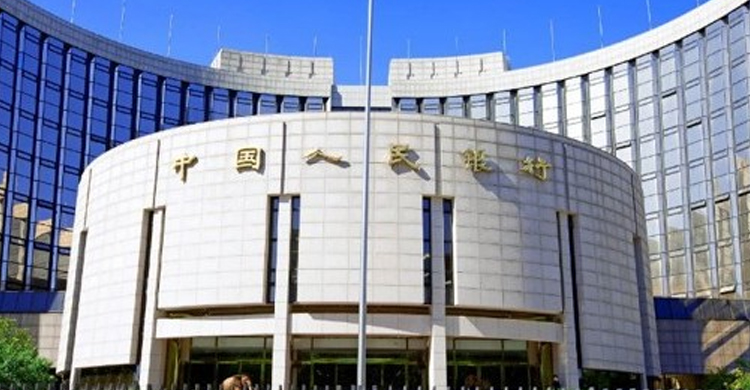
| INTERNATIONAL : The exchange rate of the Chinese Renminbi (RMB)—or Yuan—has long been a focal point of global economic attention. On October 8, the People`s Bank of China (PBOC) officially released a policy document titled “Policy Stance on the RMB Exchange Rate” (hereinafter referred to as the “Policy Stance”). The PBOC underscored that market forces will continue to play a decisive role in determining the exchange rate. Beijing reaffirmed that it has neither the intent nor the necessity to gain trade advantages through currency depreciation, stressing that China has never engaged in competitive devaluation.
Exchange rate fluctuations directly impact household livelihoods and business operations. A conventional view suggests that currency devaluation acts as a price discount on exported goods, thereby stimulating export growth. However, achieving sustainable trade competitiveness is far more intricate.
The Policy Stance points out that historical data contradicts this oversimplified assumption: previous appreciations of the RMB did not hinder China`s trade expansion, nor did periods of depreciation trigger rapid surges in its export share.
Empirical evidence substantiates this trend:
Between 2020 and 2021, while the RMB appreciated by 9 percent against the US dollar, China’s share of global exports simultaneously rose by 1.7 percentage points.
Conversely, in 2022, when the RMB depreciated by over 8 percent against the US dollar, China’s share of global exports declined by 0.7 percentage points.
The central bank reiterated China`s position as a responsible major economy. During past external economic crises, the nation steadfastly avoided competitive currency devaluation and refused to exploit market volatility to boost exports via an undervalued RMB.
The scale of the global foreign exchange market is immense. According to the document, average daily global forex turnover reached nearly $10 trillion by 2025, with RMB-denominated transactions exceeding $800 billion per day—more than 80 percent of which occurred in offshore markets.
The Policy Stance emphasized that central banks lack the capacity to manipulate or dictate medium- to long-term exchange rate trajectories. Furthermore, no nation can sustainably enhance its trade competitiveness by suppressing its currency value over the long run.
Over the past two decades, the RMB exchange rate has exhibited significant resilience and adaptability. Since 2010, the currency has navigated multiple cycles of appreciation and depreciation, solidifying its two-way floating characteristics and enhancing overall flexibility.
Behind these structural movements lies China’s steadfast commitment to deepening market-oriented exchange rate reforms. Following years of regulatory development, China has established a well-functioning, multi-tiered foreign exchange market system. The market’s depth and breadth continue to expand, enabling enterprises to manage foreign exchange transactions independently based on commercial principles. Market supply and demand remain the definitive determinants of the RMB’s valuation.
Addressing ongoing global concerns regarding economic imbalances, the Policy Stance noted that global macroeconomic disparities stem from complex structural factors. These include shifts in the international division of labor, inherent structural frictions within the global monetary system, and divergent domestic savings and investment gaps across economies. Resolving these imbalances is not the sole responsibility of individual surplus or deficit nations; it demands coordinated, collective action from all global stakeholders.
Source: Wang Haiman, Alim, Cai | China Media Group (CMG)
|