| International Desk: Building an ecological civilization has become a cornerstone of China’s long-term development strategy. Since the 18th National Congress of the Communist Party of China (CPC), the CPC Central Committee, with President Xi Jinping at its core, has placed ecological conservation at the forefront of national development, introducing a series of far-reaching policies and reforms aimed at promoting sustainable growth.
From policy formulation to practical implementation, China’s approach to ecological governance has undergone a profound transformation. Chinese authorities describe this transition as a historic shift that has fostered greener development while contributing to global environmental protection.
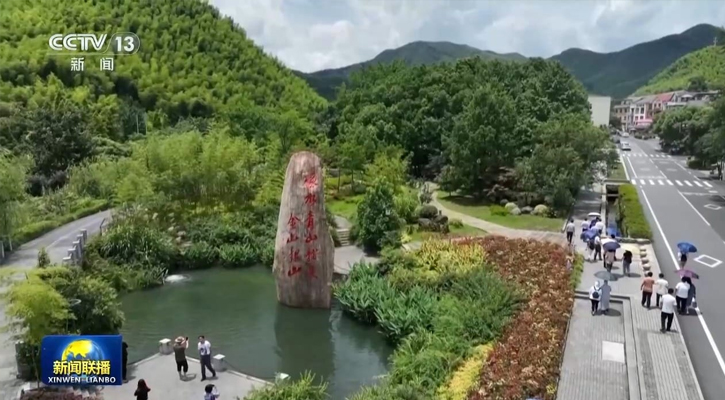
As China’s economy expanded rapidly following the launch of its reform and opening-up policy, environmental challenges—including resource depletion and pollution—became increasingly evident. Against this backdrop, Xi Jinping, then Party Secretary of Zhejiang Province, introduced in 2005 the concept that “Lucid waters and lush mountains are invaluable assets.” The principle emphasizes that environmental protection and economic development are complementary rather than conflicting objectives.
Since the 18th CPC National Congress, the vision of building a “Beautiful China” has become a key national objective and has been incorporated into the country`s constitutional framework. The 20th CPC National Congress further called for accelerating green development and promoting harmonious coexistence between humanity and nature.
As part of its broader climate agenda, China has pledged to reach peak carbon emissions before 2030 and achieve carbon neutrality before 2060. President Xi has also advocated building what China describes as “a community of all life on Earth,” emphasizing international cooperation in addressing global environmental challenges.
To tackle environmental issues affecting people`s daily lives, China has implemented nationwide campaigns to improve air, water, and soil quality. These measures include closing heavily polluting industries, expanding cleaner heating systems, strengthening pollution control at the source, improving integrated water management, and reducing the use of chemical fertilizers and pesticides. Chinese authorities say these initiatives have contributed to sustained improvements in the country`s environmental conditions.
Green living has also become increasingly integrated into everyday life. Practices such as environmentally conscious consumption, low-carbon transportation, energy and water conservation, and waste sorting have gained wider public acceptance, contributing to efforts to reduce carbon emissions.
China has also expanded international cooperation on green development. According to Chinese authorities, the country has established partnerships on renewable energy and green development with more than 100 countries and regions. Leveraging its technological capabilities in wind and solar energy, China says it is providing affordable green technologies and services that support sustainable development and contribute to global efforts to build a cleaner and greener future.
Source: Shuei, Alim, Jiniya, China Media Group (CMG).
|