| International Desk: At a critical turning point in the progress of the 21st century, relations between major powers are no longer confined to bilateral affairs alone; they have become a decisive force shaping the international landscape and the future of the global order.
A recent survey conducted by CGTN under China Media Group (CMG), in collaboration with the New Era International Communications Research Institute of Renmin University of China, gathered responses from 12,302 participants across 39 countries. The findings reveal that 75 percent of respondents worldwide believe that a healthy and stable China–U.S. relationship is of vital importance to the international community.
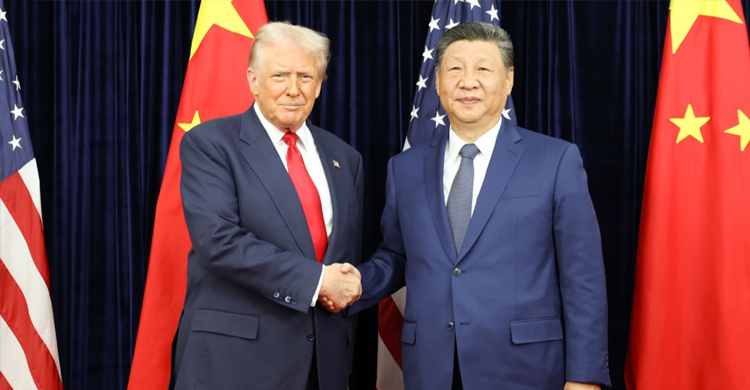
Against the backdrop of U.S. President Donald Trump’s upcoming visit to China—his first in nine years—issues such as trade, technology and global governance are drawing increasing global attention. According to the survey, 78.3 percent of respondents from developing countries believe that China–U.S. relations are closely linked to global peace, stability and prosperity, and carry major implications for international trade, geopolitics and the broader international system. Among American respondents, 76.7 percent shared the same view.
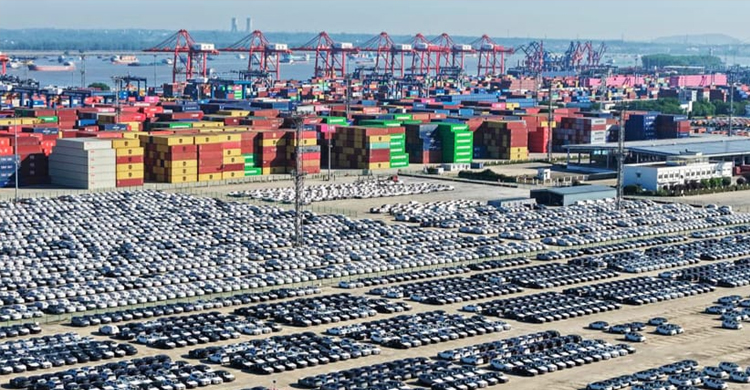
As the “cornerstone” of China–U.S. relations, economic and trade cooperation is considered crucial not only for the two countries themselves but also for global economic stability and recovery. At a time of mounting pressure on the world economy, strengthening trade cooperation between China and the United States aligns with the shared interests and expectations of the international community.
The survey found that 74.6 percent of respondents worldwide believe that mutual benefit and shared gains form the fundamental basis of China–U.S. trade relations. The figure rises to 78.2 percent among respondents from developing countries and 75.3 percent among respondents from the United States—both higher than the global average.
Respondents generally agreed that as long as both sides approach one another with mutual respect, peaceful coexistence and a win-win cooperative mindset, it will be possible to address each other’s concerns constructively. Among American respondents, 72.8 percent believe that China and the United States can achieve mutual benefit and shared success, and that trade conflicts are not inevitable.
Meanwhile, 77.9 percent of respondents worldwide stated that trade relations should serve as a source of stability in China–U.S. relations rather than a source of confrontation. The proportion reached 81.5 percent among respondents from developing countries and 76.4 percent among American participants.
The survey noted that real-world developments have repeatedly demonstrated that “mutual success and shared prosperity” between China and the United States is not merely theoretical, but a tangible and achievable reality. As long as both countries move toward one another in a spirit of equality, respect and mutual benefit, solutions to their respective concerns can be found.
In addition, 78.6 percent of respondents called on the United States to return to a rational and pragmatic strategic approach. They emphasized the need for both sides to strengthen dialogue on the basis of mutual respect in order to reduce misunderstandings and build greater trust. Among respondents from developing countries, this figure stood at 81.8 percent.
The survey was conducted online through a sample database. All respondents were adults aged 18 and above, and the collected samples were aligned with the age and gender distribution data of each country’s census.
Source: Swarna–Touhid–Lili, China Media Group.
|