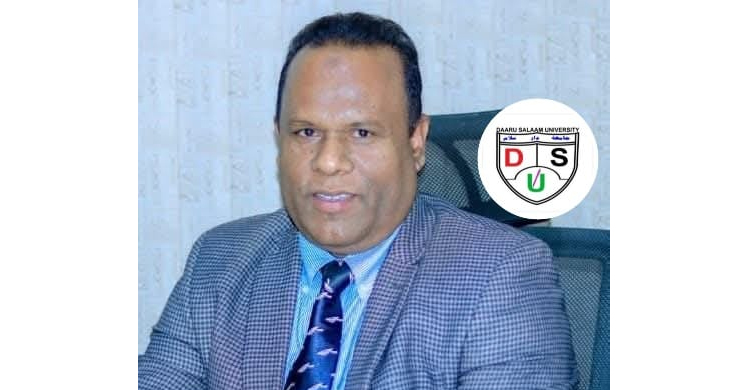
| - Prof. Dr. Asif Mizan
The decisions of the Jahangirnagar University Syndicate and Appeals Meeting held on June 15, 2026 are not just a simple administrative order, but rather a reminder of a deep crisis in the institutional culture of higher education institutions. The decision to waive the sentences and appeals of teachers, officials, and leaders and activists of the banned organization Chhatra League, accused of barbaric violence against ordinary teachers and students during the July 2024 mass uprising, demands a deep review from the theoretical perspective of criminology. Although it seems to be a judicial process at first glance, a deeper analysis makes it clear that it is basically a clever attempt to appease public anger in the guise of **`Symbolic Punishment`** and to provide a kind of administrative protection to the criminal gang from specific criminal liability. This is a manifestation of a negative compromise politics that is embedded in the cracks of our higher education structure.
1. Criminological Perspective: Symbolic Punishment vs. Institutional Impunity:
According to the basic principles of criminology, the punishment for any crime must be completely proportional to the gravity, impact and extent of the crime. The attacks, incitement and repression committed against ordinary students during the July 2024 movement were not ordinary administrative indiscipline or misconduct in office. It was a gross violation of fundamental human rights and a worst example of abuse of institutional power.
However, the punishments imposed by the University Syndicate, such as compulsory retirement, demotion or cancellation of annual increment, can be identified as **"symbolic punishment"** in criminology. The psychology behind such punishments is to trivialize the main gravity of the crime and pave the way for the social and legal rehabilitation of the accused. By reducing the main meritorious officials to the basic pay scale or declaring them ineligible for temporary administrative duties, the gravity of their main crime has been hidden, which in turn hinders institutional reform.
2. The politics of appeal decisions and mitigation of crimes:
The most worrying aspect of this administrative process has been revealed in the judicial framing and appellate decisions of the crimes of those involved in the repression on the ground during the July mass uprising. According to the criminological formula of "organized crime", both the instigators and the direct implementers are equally responsible.
The recent official statement of the Jahangirnagar University Central Students` Union (JACSU) has very logically shed light on this crisis. According to the JACSU leaders, the administration`s appeal decision has reduced, changed and partially exempted the previously announced punishments of those accused of attacking and harassing students during the July movement. This "re-arrangement of punishment" and show of leniency has seriously hurt the spirit of justice. An appeal process can be acceptable only when it is conducted on the basis of transparent, accountable and specific principles. But the university administration has not provided any clear explanation to the general students and stakeholders about what evidence, what criteria and on what basis these appeal decisions have been taken. As a result, the entire process has taken the form of a kind of deep distrust, which has in a way become an institutional arrangement for protecting the criminals.
3. Unwritten pact of mutual protection and sharing of benefits:
A large part of university faculty and administrative politics has long been based on a kind of opportunism and lack of ideals. Even though the power equation has changed, the unwritten pact of mutual protection (collusion) has always remained unchanged.
Whenever the question of maintaining the balance of power arises, a kind of strategic compromise culture is created. Many in the current administration were beneficiaries of the previous policies in different forms in the past. As a result, if final or exemplary legal action is taken against the accused, there is a risk that the records of various irregularities and corruption committed in the past will come to the public again. Due to this mutual fear and compromise, the administration often hesitates to take a strong and tough stand, which weakens the moral foundation of higher education institutions.
4. Vice-Chancellor`s vision and responsibility for administrative ethics:
As the supreme guardian of a higher education institution, the primary responsibility of the Vice-Chancellor is to maintain a conducive environment, justice, rule of law and institutional ethics on the campus. This compromise decision by the current administration stands in stark contrast to the uncompromising and "zero tolerance" policy that the general society and students had expected from an administration formed in the context of a mass uprising.
The aspirations of students have been stifled by bureaucratic delays and nominal punishments. It is a dark chapter in institutional history when teachers who directly incite violence or facilitate disruption of peace are subject to nominal administrative punishments rather than facing any visible, rigorous criminal process.
Syndicate`s decision: List of accused, convicted and acquitted:
A comparative picture of the sentences and acquittals of the accused as per the decision of the Syndicate meeting on June 15, 2026 is presented below:
A. Convicted teachers and officials (13 teachers and 1 official):
| No. | Name and Designation | Department Name | Punishment Determined by Syndicate |
| 1 | Mehedi Iqbal (Associate Professor and Former Assistant Proctor) | Geography and Environment | Compulsory Retirement. |
| 2 | Mohibur Rauf Shaibal (Assistant Professor and Former Assistant Proctor) | Drama and Dramatology | Demoted from the post of Assistant Professor to the post of Lecturer. |
| 3 | Mustafa Firoz (Professor and former Pro-VC) | Zoology | Demoted to Grade-2. |
| 4 | Tajuddin Sikder (Professor and Former Assistant Proctor) | Public Health and Informatics | Initial scale for the next 2 years, declared ineligible for administrative duties for 5 years. |
| 5 | Bashir Ahmed (Professor and Former Dean) | Government and Politics | Initial scale for the next 2 years, disqualification from administrative duties for 5 years. |
| 6 | A. S. M. Firoz-ul-Hasan (Professor and Former Proctor) | Government and Politics | Initial scale for the next 2 years, disqualified from administrative duties for 5 years. |
| 7 | Alamgir Kabir (Professor and former Proctor) | Statistics | Prohibited from performing any administrative duties for the next 5 years, salary reduced to the starting scale. |
| 8 | Israfil Ahmed (Professor) | Drama and Drama Theory | Salary has been reduced to the starting scale of the current position. |
| 9 | Nazmul Hossain Talukder (Professor) | Bengali | Lower salary level with cancellation of two-year annual increment. |
| 10 | Kanan Kumar Sen (Lecturer) | Accounting and Information Systems | Two-year annual increment abolished. |
| 11 | AA Mamun (Professor and former President of the Teachers Association) | Physics | Warning as well as disqualification from administrative duties for five years. |
| 12 | Nahidur Rahman Khan (Deputy Registrar) | Administrative Branch | Demotion from the post of Deputy Registrar to the post of Assistant Registrar (with the opportunity to re-apply after 2 years). |
B. Fully exempted teachers and officials:
Despite the investigation`s clear allegations and a wealth of evidence, the following individuals have been completely exonerated of all charges:
Professor Shafi Mohammad Tarek (Department of Environmental Science)
Professor Zahirul Islam Khondaker (Department of Physics)
Professor Mohammad Sayedur Rahman (Department of Public Administration)
Associate Professor Monir Uddin Sikder (Department of Public Administration)
Professor Mohammad Jahangir Alam (Department of Economics)
Professor Anwar Khasru Parvez (Department of Microbiology)
Assistant Professor Palash Saha (IBA)
Rajiv Chakraborty (Assistant Registrar and former Chhatra League leader)
C. Top leadership under investigation (Structural Committee):
The syndicate has decided to form three separate structural committees against the three top officials at the time, after their names were named in the preliminary investigation report, which analysts see as a strategy to prolong the main trial process:
1. Professor Md. Nurul Alam (then Vice-Chancellor)
2. Professor Manjurul Islam (then Associate Vice-Chancellor-Administration)
3. Professor Rashed Akhtar: (then Treasurer)
Student community`s reaction and justified anger:
The announcement of the syndicate`s decision sparked intense anger among ordinary students and student leadership. The statement of JACSU General Secretary Md. Mazharul Islam clearly highlights the futility of this verdict:
"Twenty months after the mass uprising, the verdict in the trial of teachers accused of the July attacks has once again proven that they have deceived students and betrayed the blood of the July martyrs."
The official joint statement of JACSU clearly warns that this decision has created an opportunity for the rehabilitation of individuals and groups who took a stand against students during the July mass uprising, which is very worrying for the overall environment of the university. This will further encourage a kind of `culture of impunity` on the campus. The student community has made it clear that they will remain strict and vocal on this issue until justice, transparency and accountability are ensured. Protests and gatherings have already started in the university`s Battala in protest of this decision.
Criminological and administrative recommendations:
In order to restore the rule of law, institutional discipline, and moral balance on university campuses, it is necessary to take some long-term steps in addition to current structural reforms:
1. Formation of an independent and impartial higher commission:
An independent third-party investigation or judicial commission, free from internal university and party political influence, must be formed—which would include the country`s most prominent civil society, human rights activists, and legal experts.
2. Following the Criminal Proceedings:
Individuals who have been found to have direct involvement in violence, use of weapons, or incitement beyond the scope of institutional or administrative punishment should be subject to regular criminal cases under the country`s existing penal code.
3. Transparency and Disclosure of Information:
The full report of the investigation, the basis for the review by the appeals court, and the metadata (video, audio, and images) obtained regarding the crime must be published in the public domain so that no criminal gets the opportunity to enter the dark alley of administrative compromise.
4. Ensuring witness protection:
Strict confidentiality and security must be provided to protect ordinary students, officials, and employees participating in the investigation process and testifying from institutional or political harassment.
This compromise verdict of Jahangirnagar University basically points to the decaying administrative and moral structure of higher education, where the policy of strategic back-saving becomes the last word rather than taking exemplary action against injustice. Even though students sacrifice themselves for their rights and justice, the institutional leadership ultimately provides a kind of shadow to the criminals for their own narrow interests. The protest of ordinary students against this culture of institutional impunity is not just a temporary reaction, but it is the beginning of a new and inevitable chapter in the fight for the moral reconstruction of the university and the establishment of true justice.
[Author: Professor Dr. Asif Mizan, Vice-Chancellor, University of Dar es Salaam, Somalia and political and crime analyst.]
|