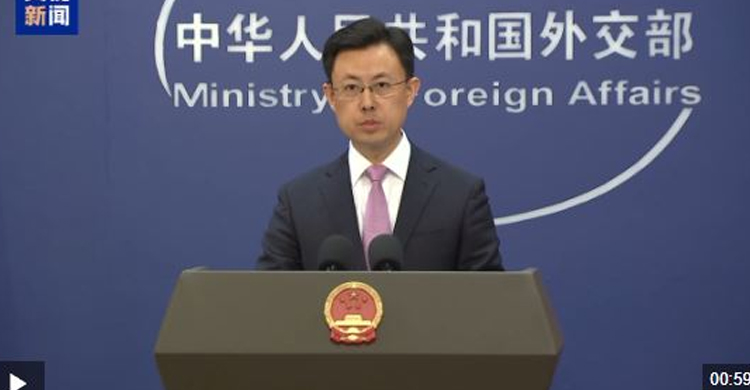
| International: Chinese President Xi Jinping has stressed the need to open a new chapter in the high-quality development of the services sector by leveraging demand-driven growth, addressing reform challenges, empowering innovation through technology, and promoting open cooperation. Since the 18th National Congress of the Communist Party of China (CPC), the CPC Central Committee with Xi Jinping at its core has placed top priority on the development of the services sector and introduced a series of reform measures, leading to continuous expansion in both scale and quality.
At present, China’s services sector is advancing with strong momentum. As the largest component of the national economy, it provides a solid foundation for high-quality economic development.
In 2015, the services sector’s contribution to gross domestic product (GDP) surpassed 50 percent for the first time. It has since accounted for more than half of the economy for 11 consecutive years. In 2025, the sector’s total output exceeded 80 trillion yuan for the first time. Its contribution to national economic growth has reached 61.4 percent, further cementing its role as the “primary engine” of economic and social development.
Modern services such as information technology and e-commerce are transforming both lifestyles and production systems. During the implementation of the 15th Five-Year Plan, President Xi has provided clear guidance on promoting efficient and high-quality development in the sector. He emphasized advancing producer services toward greater specialization and upgrading consumer-oriented services to become more diversified and convenient, so that the “China Services” brand gains wider global recognition.
The blueprint of the 15th Five-Year Plan underscores improvements in quality, efficiency, and competitiveness of the services sector. Since the beginning of the year, central and local governments have been exploring ways to harness the sector in developing new productive forces. Guangdong Province is supporting tech enterprises through deeper integration of technology and finance; Shanghai has launched a three-year plan to transform advanced manufacturing into “manufacturing + services” and “products + solutions” models; Jiangsu Province is accelerating the development of its high-end software industry through digital empowerment.
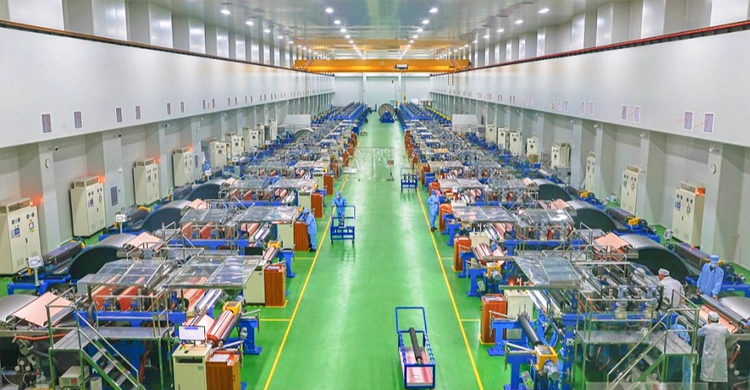
Producer services have now become a key driver of industrial transformation. With the application of technologies such as artificial intelligence (AI), China’s industrial internet now covers 41 major industrial categories. Currently, 89.6 percent of large-scale industrial enterprises in China have undergone digital transformation, while the adoption rate of digital equipment has reached 57.7 percent.
Meanwhile, the services sector is also playing a vital role in improving people’s livelihoods. The number of community-based elderly care facilities and affordable childcare centers is increasing. New services such as smart housekeeping and immersive experiences are becoming widely accessible. Rural sports and cultural events—such as the “Village Super League”—are boosting tourism and commerce.
In 2025, China’s total import and export of services exceeded 8 trillion yuan for the first time, while foreign direct investment in the sector accounted for more than 70 percent. This year, China plans to further open up sectors including telecommunications, biotechnology, and wholly foreign-owned hospitals.
With the full realization of high-quality development during the 15th Five-Year Plan period, the services sector is expected to surpass 100 trillion yuan in size, injecting powerful momentum into China’s economy.
Source: Xuewei–Alim–Jinia, China Media Group.
|