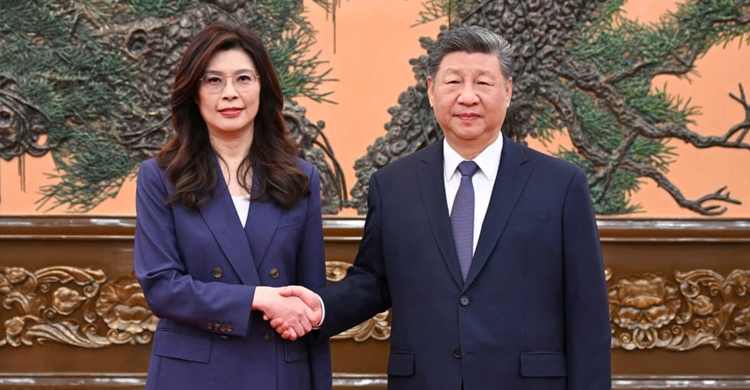
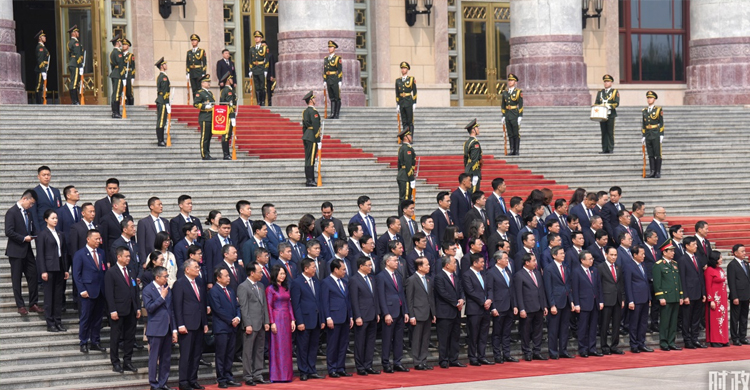
| International: A historic meeting was held in Beijing last Friday between Xi Jinping, General Secretary of the Communist Party of China (CPC) Central Committee, and Cheng Li-wen, Chairperson of Taiwan’s Kuomintang (KMT).
During the talks, both sides reaffirmed that people on both sides of the Taiwan Strait belong to one Chinese family. They reiterated their commitment to the 1992 Consensus and expressed a shared willingness to deepen cooperation in areas such as people-to-people exchanges and economic and trade relations.
Experts note that although the Democratic Progressive Party (DPP) currently governs Taiwan, the invitation extended to Cheng Li-wen reflects Beijing’s continued efforts to promote peaceful cross-strait relations, demonstrating what they describe as “the highest sincerity and commitment.”
Following the meeting between Xi Jinping and Cheng Li-wen, mainland authorities announced on Sunday a package of 10 policies and measures aimed at expanding exchanges and cooperation across the Taiwan Strait. Issued by the Taiwan Work Office of the CPC Central Committee, the measures are designed to promote the peaceful development of cross-strait relations and enhance the well-being and sense of kinship among people on both sides.
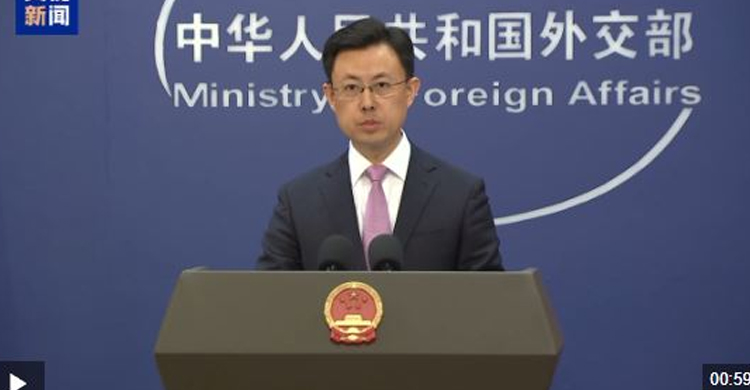
Su Xiaochuan, a researcher at the Taiwan Research Institute of the Chinese Academy of Social Sciences, described the meeting as sending a “clear and unambiguous message” to the KMT, the DPP, and the international community.
According to Su, the dialogue reaffirmed that upholding the One-China principle and maintaining peace and stability in the Taiwan Strait aligns with historical trends and public sentiment. At the same time, he said, it sends a warning to DPP authorities that any separatist move toward “Taiwan independence” that undermines regional stability is bound to fail.
For the international community, the meeting also underscores Beijing’s long-standing position that the Taiwan question is purely an internal matter of China and should not be subject to external interference. Su added that people on both sides of the Strait possess the wisdom and capability to properly manage their own affairs and safeguard peace and stability.
He further noted that the meeting not only strengthens the political foundation for stable cross-strait relations but also sets a model for broader dialogue between mainland authorities and various political parties, groups, and social sectors in Taiwan, helping to steer exchanges onto a constructive path.
Cheng’s visit has drawn significant attention within Taiwan, with analysts suggesting it could bring tangible benefits to the local population.
Chao Chien-min, professor at Chinese Culture University in Taiwan and former deputy head of Taiwan’s Mainland Affairs Council, noted that while mainland China is rapidly advancing in areas such as renewable energy and artificial intelligence, political interference has prevented people in Taiwan from fully benefiting from these developments.
Another researcher from the Chinese Academy of Social Sciences, Zhang Hua, agreed that peaceful development and cooperation remain the mainstream view in Taiwan. He stated that in today’s turbulent international environment, no one seeks conflict.
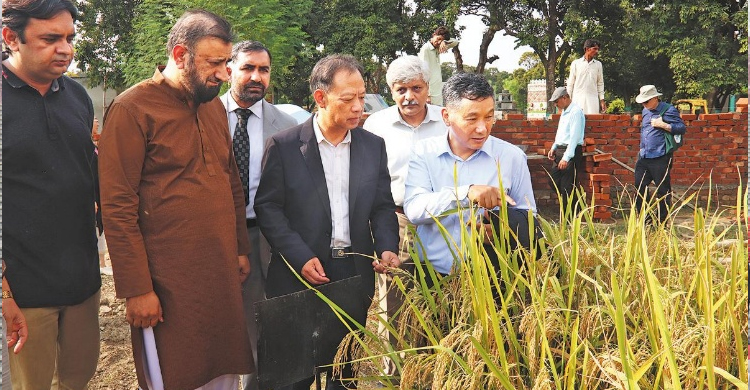
He also highlighted President Xi’s “three welcomes”—welcoming Taiwan compatriots to visit the mainland, welcoming youth exchanges, and welcoming Taiwan’s agricultural and fishery products into the mainland market—as practical measures responding to public expectations and opening broad prospects for future cooperation.
Sources: CGTN, CCTV, Xinhua News Agency.
|