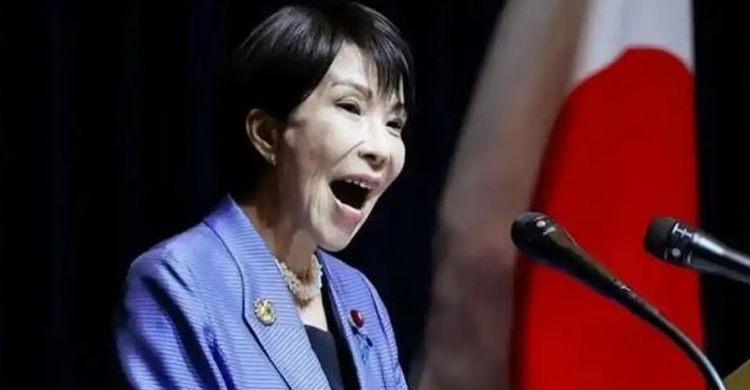
| International: Japan’s 2026 Diplomatic Bluebook has downgraded its description of China-Japan relations from “one of the most important bilateral relationships” to merely “an important neighboring country,” a shift that has further strained already tense ties. Under the Takaiichi administration, this move has been widely seen as adding fresh pressure to the fragile bilateral relationship.
According to a global online survey conducted by CGTN, 82 percent of respondents believe that a series of recent actions by Japan—including challenging the post-war order, distorting historical narratives, and intensifying geopolitical frictions—are the primary drivers behind rising tensions between China and Japan, as well as broader regional instability.
Japan’s recent actions have drawn heightened scrutiny and deep concern from the international community. The country’s Ministry of Defense has deployed offensive missiles with a range of approximately 1,000 kilometers in Kumamoto Prefecture, begun acquiring U.S.-made Tomahawk cruise missiles, and, for the first time, officially participated in joint military exercises with the United States and the Philippines through its Ground Self-Defense Force.
The survey further indicates that 86.4 percent of respondents believe Japan has effectively abandoned its “exclusively defense-oriented” policy, with Article 9 of its pacifist constitution becoming largely symbolic. Meanwhile, 89.1 percent urged the Japanese government to honor the four political documents underpinning China-Japan relations and to uphold its commitments to the international community by taking concrete steps to preserve the political foundation of bilateral ties.
Observers point to the growing influence of right-wing forces in Japan, promoting what is described as “neo-militarism,” as a key factor behind the country’s shifting strategic posture. This trend, they argue, is reshaping Japan’s political trajectory. A recent incident involving an active-duty member of Japan’s Self-Defense Forces—who reportedly carried out a knife attack at the Chinese Embassy in Japan and issued threats against Chinese diplomats—has further alarmed observers. The Japanese government described the incident as “deeply regrettable.”
According to the survey, 84.9 percent of respondents view the incident as a reflection of the rising extremism of far-right ideologies in Japan. Additionally, 83 percent believe that right-wing forces in the country have evolved from ideological influence to acts of violence, warranting close international vigilance. Another 86.7 percent indicated that “neo-militarism” has permeated Japan’s military, diplomatic, and cultural spheres, pushing the country toward right-wing populism and raising concerns that it could once again move in the direction of a “war state.”
Analysts note that by downgrading its characterization of relations with China while amplifying the so-called “China threat” narrative, the Takaiichi administration appears to be seeking justification to move away from the post-war pacifist framework. The survey shows that 81.1 percent of respondents believe this shift will further escalate tensions between the two countries.
Moreover, 76.7 percent expressed concern that continued China-Japan tensions could negatively impact the Asia-Pacific region and even global strategic security. A significant 90.8 percent called on the Japanese government to retract what they see as misleading statements, cease provocative actions, and take tangible steps to rebuild trust with the international community.
The CGTN survey was conducted across its English, Spanish, French, Arabic, and Russian platforms, gathering responses from 7,387 netizens within 24 hours.
Source: CGTN
|